TAKING A SECOND LOOK
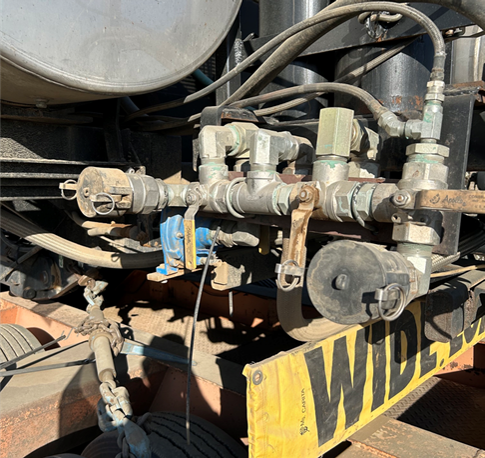
Have you ever walked past a nurse tank, tractor tank, or fill valve and noticed how easy it would be to bump the handle without meaning to? It doesn’t take much. A pant leg, a glove, a hose, a step onto the tractor, or just walking too close to the tank can be enough to move an exposed valve handle into the open position. Application season is a busy time and we all want to get finished and move to the next task. An accidental release could stop us in our tracks. That is why it is worth taking a second look before starting an application.
WHAT TO LOOK FOR: KEY PREVENTION POINTS
PROTECT EXPOSED VALVE HANDLES:
Before application, check whether any fill valve, drain valve, or hose-end valve can be contacted while walking around the tractor, climbing on/off, checking equipment, or turning near the tank.
RECOMMENDED IMPROVEMENTS:
- Install a valve handle guard or protective cage around exposed fill valves.
- Use a recessed valve layout where the valve handle does not protrude beyond the tank frame.
- Add a secondary valve cap or plug on fill points.
- Use lockable or detented valve handles where appropriate.
- Position handles so the closed position is less likely to be bumped open.
USE SAFETY CAPS OR PLUGS ON FILL VALVES:
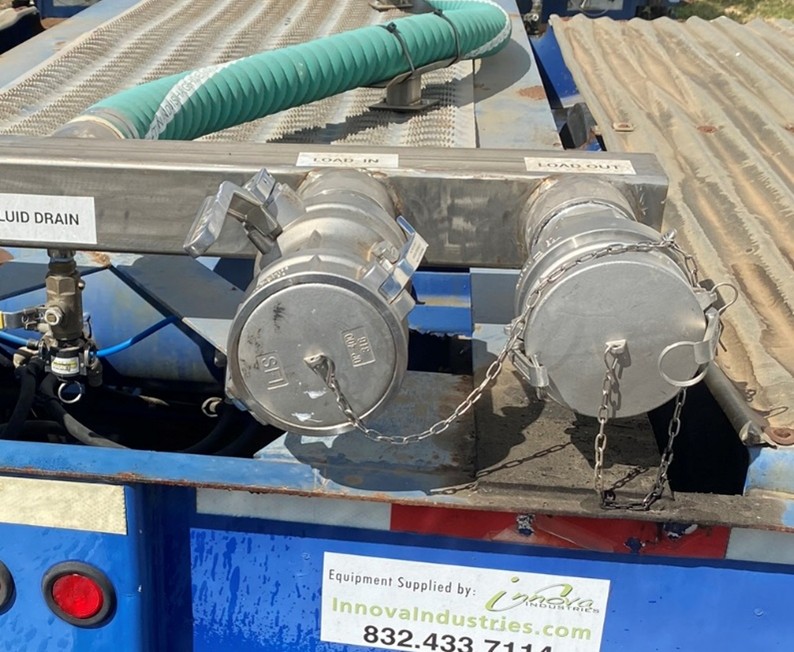
A closed valve should not be the only barrier. Every fill valve or hose connection point should have a secure cap, plug, or camlock dust cap installed when not actively filling, transferring, or cleaning out.
BEST PRACTICES FOR CAMLOCK-STYLE FITTINGS:
- Camlock cap with gasket.
- Locking cam arms.
- Safety clips through cam arms.
- Tethered caps to prevent loss.
- Product-compatible cap materials (a cap does not replace the valve, but it provides a secondary containment point if the valve is bumped or fails to fully seat).
SUGGESTED EQUIPMENT IMPROVEMENTS
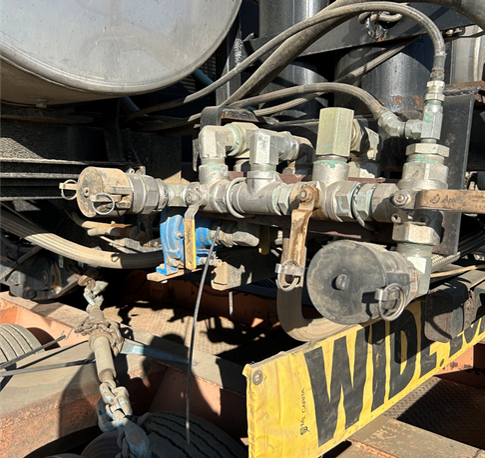
AT A MINIMUM: Install a tethered cap or plug on the fill valve and require it to be secured whenever the valve is not actively in use.
IF POSSIBLE: Install a tethered cap or plug on the fill valve and require it to be secured whenever the valve is not actively in use.
BEST IMPROVEMENTS, USE COMBINATION OF:
- Protected or recessed valve location.
- Lockable or detented valve handle.
- Secondary cap or plug.
- Safety clip or locking cam arms.
- Clear valve-position labeling.
- Pre-application inspection checklist.
APPLICATOR RESPONSE REMINDER
IF A PRODUCT CONTACTS SKIN OR CLOTHING:
- Move away from the source.
- Stop the release if it can be done safely.
- Remove contaminated clothing promptly.
- Wash affected skin thoroughly with clean water.
- Follow the product label and SDS first-aid
instructions. - Contact the emergency number listed on the
product documentation. - Seek medical evaluation for dermal or eye
exposure as appropriate.
Learn more about safe stewardship of TELONE™ by Teleos at www.teleosag.com/stewardship/
You can also download a version of this in a handy PDF Tip Sheet.
Remember, there’s no coming back from a poor start!
Disclaimer:
The resources and information provided are meant purely for educational discussion, contains only general information about legal matters, and is not to be construed as advice. Please note that any information or resources provided are not legal or regulatory advice, and should not be treated as such. You must not rely on the information provided as an alternative to legal advice from your attorney or other professional services. Teleos Ag encourages readers to consult with counsel, and their local, county, and state regulators. We make no representations or warranties, express or implied, in relation to the information provided through our resources and blog posts. It is the readers responsibility to know the laws related to 1,3- D, appropriate PPE, Licensing, etc., in his or her City, County, State, and Country.

- BEFORE YOU START THE TRANSFER: A 60-SECOND TELONE TRANSFER CHECK - September 14, 2026
- CYLINDER QUICK-CONNECT FITTING CARE: Proper Use & Care for 110-Gallon Pig Connections - August 12, 2026
- VALVING ON APPLICATION EQUIPMENT - June 15, 2026