BEFORE YOU CONNECT
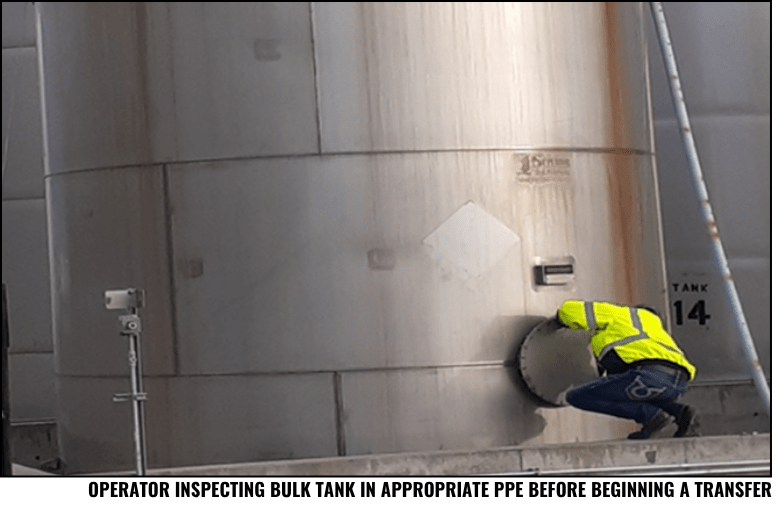
- Loading starts before the pump runs. Removing caps, connecting hoses, operating valves and disconnecting equipment can expose handlers to liquid or vapor. Put on the required PPE before opening any product connection; keep it on through disconnecting and capping.
1. ARRIVE READY TO LOAD
- Confirm the exact product and terminal PP requirements before pickup. Review the applicable label and SDS with the terminal operator. The driver and at least one qualified facility employee must remain present and attentive while the truck is connected. Agree on responsibilities, shutdown signals and emergency equipment locations.
2. CHECK YOUR PPE: LIQUID-CONTACT TASKS
- For routine outdoor or well-ventilated TELONE™ II by Teleos soil fumigant transfer tasks, verify the following against the label accompanying the product:
- BODY: Wear loose coveralls over, at minimum, a short-sleeved shirt and short pants; add a chemical-resistant apron.
- HANDS AND FEET: Use chemical-resistant gloves (such as EVAL barrier laminate or Viton) and chemical-resistant footwear with socks.
- HEAD: Add chemical-resistant headgear when overhead exposure is possible.
- EYES: Use a face shield or safety glasses with brow and temple shields. Do not wear chemical goggles. A properly fitted full-face respirator provides eye protection, as described in the guide.
- RESPIRATOR: Use the label-specified half-face respirator with an organic-vapor cartridge plus pesticide-approved prefilter (TC-23C), or pesticide-approved canister (TC-14G). Follow all additional label respirator requirements. Inspect PPE before use.
- Verify respirator medical clearance, fit testing, training and a user seal check. Follow the required cartridge-change schedule. Leather work gloves and leather boots alone do not provide chemical-resistant protection.
3. KEEP PROTECTION ON THROUGH THE LAST CONNECTION
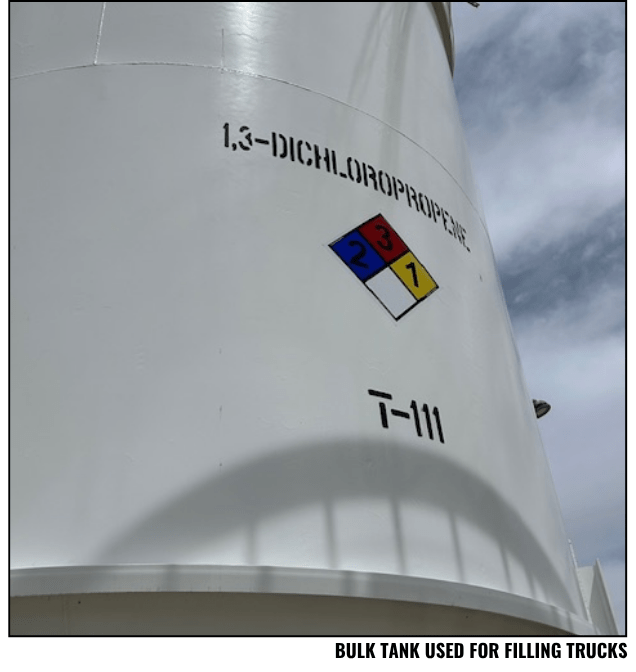
- Residual product may be trapped behind caps or plugs. Use required PPE for connecting, transferring, sampling, handling hoses, disconnecting and securing openings. Dry-disconnect fittings do not eliminate PPE requirements. Do not treat a driver working around transfer equipment as exempt simply because terminal staff operate the pump.
4. REMOVE PPE & CLEAN UP
- After equipment is secured, remove PPE in a safe area using procedures that prevent skin contact. Clean and store reusable gear as directed; keep contaminated items out of the cab. If a leak occurs, stop the transfer safely and follow the site emergency procedure. This routine-loading checklist does not cover emergency response or tank entry.
- BEFORE THE FIRST CAP COMES OFF, PPE GOES ON. Use the actual product label and any stricter terminal or state requirements. Chloropicrin blends require a separate product-specific PPE review.
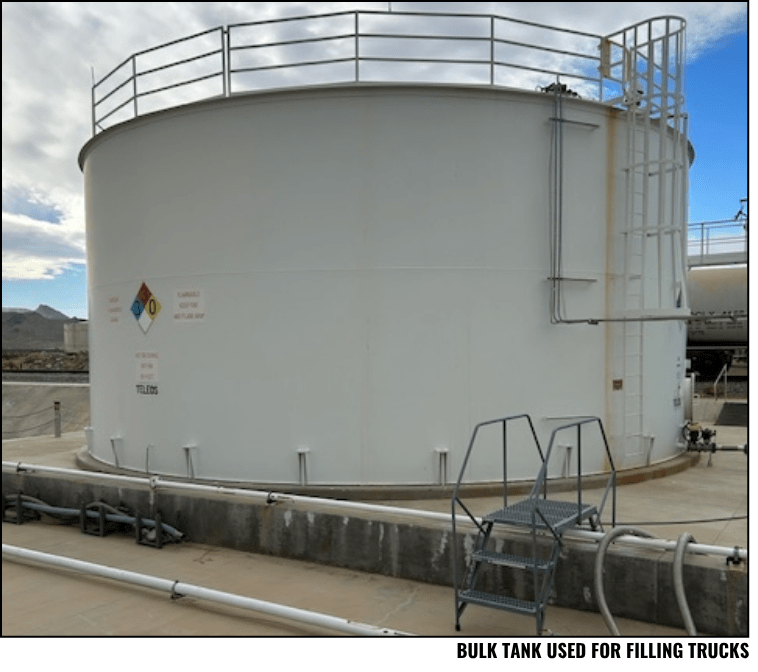
Learn more about Teleos Ag Solutions’ stewardship efforts and access tip sheets, labels, SDSs, and more: https://teleosag.com/stewardship/
Disclaimer:
The resources and information provided are meant purely for educational discussion, contains only general information about legal matters, and is not to be construed as advice. Please note that any information or resources provided are not legal or regulatory advice, and should not be treated as such. You must not rely on the information provided as an alternative to legal advice from your attorney or other professional services. Teleos Ag encourages readers to consult with counsel, and their local, county, and state regulators. We make no representations or warranties, express or implied, in relation to the information provided through our resources and blog posts. It is the readers responsibility to know the laws related to 1,3- D, appropriate PPE, Licensing, etc., in his or her City, County, State, and Country.

- TRUCK LOADING PPE - November 16, 2026
- BEFORE YOU START THE TRANSFER: A 60-SECOND TELONE TRANSFER CHECK - September 14, 2026
- CYLINDER QUICK-CONNECT FITTING CARE: Proper Use & Care for 110-Gallon Pig Connections - August 12, 2026